
CEDA’s mission is to amplify the voices of those affected by policy across Latin America and the Caribbean. In the next five News Briefs, CEDA is collaborating with photojournalist Natalia Favre on a “Havana Dispatch.” She will share exclusive insights into conditions on the ground in Havana. CEDA hopes this series will provide insight into everyday life on the island. You can read her first dispatch here.
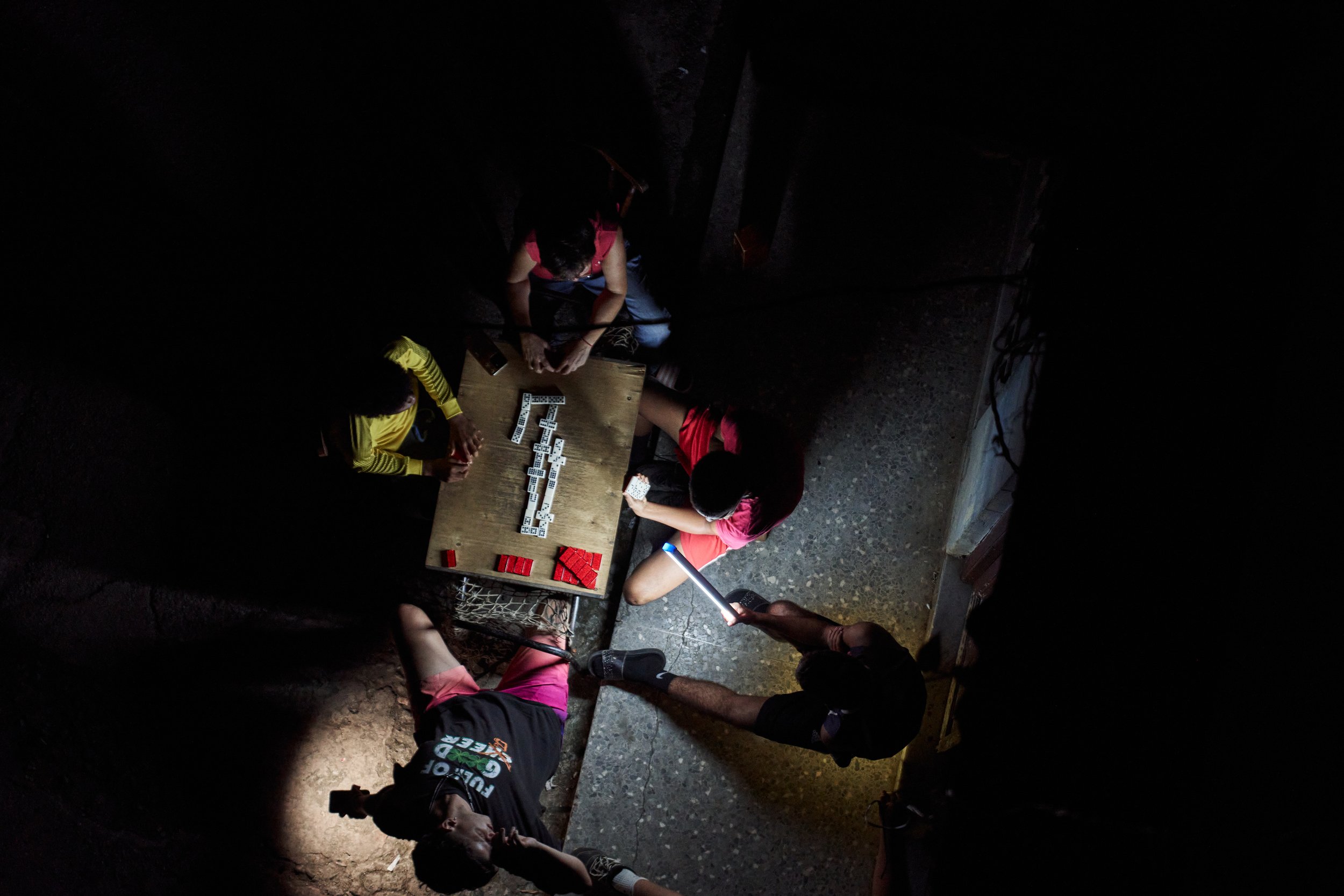
Favre captures a night in Havana during one of the island’s recurring blackouts.
On March 13, Cuba’s President Miguel Díaz-Canel publicly acknowledged that Cuba is engaged in talks with the US. Speaking after a meeting of the Council of Ministers, President Díaz-Canel said the talks seek to “find solutions, through dialogue, to the bilateral differences between our two nations,” and emphasized that they would be conducted with respect for the political systems and sovereignty of both countries. He also added, “these exchanges have been favored by international actors.”
This announcement was paired with news that Cuba plans to release 51 political prisoners, framing the decision as part of an arrangement negotiated with the Vatican, which has long served as a backchannel interlocutor with the island and has recently hosted meetings with both top U.S. and Cuban officials. While Cuban officials relentlessly frame these decisions as sovereign, the timing reads as concessions heavily influenced by U.S. pressure.
During the press conference, President Díaz-Canel addressed the recent shootout between Cuban Border Patrol and a Florida-registered speedboat. In response to a question about the incident, the president stated that FBI officials would soon travel to Cuba to investigate. President Díaz-Canel also mentioned that the government is working on measures to involve the Cuban diaspora more directly in the country’s economy, though he provided few details beyond saying an announcement will be made as soon as Monday.
Other details from the president’s remarks stand out as notable. Among those in attendance at the Council of Ministers meeting and at the press conference this morning was Raúl Castro’s grandson, Raúl Guillermo Rodríguez Castro, who reportedly met with a U.S. official in recent weeks. Rodríguez Castro holds no official title within Cuba’s government but appears to be playing a role in ongoing negotiations, highlighting the continued involvement of the Castro family in state affairs. His presence underscores the possibility that Washington may be engaging directly with figures tied to the government.
Signs that negotiations were underway have been emerging for several weeks. Recent reporting suggests the Trump administration may be pursuing a deal that diverges sharply from the kind of U.S. intervention or regime collapse long imagined by parts of the South Florida exile community. An exclusive report in USA Today indicated that the administration is close to reaching an economic arrangement with Cuba’s government that would depose President Díaz-Canel and allow members of the Castro family to remain on the island.
President Donald Trump has certainly had Cuba on his mind in recent weeks, making a series of striking public remarks about the island’s future and the possibility of U.S. involvement. In one comment, he suggested that Cuba’s dire economic condition could open the door to American influence, stating, “They have no money, they have no anything right now. But they’re talking with us and maybe we’ll have a friendly takeover of Cuba.” Days later, during a meeting at the White House with the Inter Miami, the 2025 Major League Soccer champions, President Trump again hinted at developments underway, saying, “It’s going to be a great day… we’ll be together again soon, I suspect, celebrating what’s going on in Cuba.” In an interview with POLITICO, he was even more direct: “Cuba’s going to fall, too,” referencing U.S. pressure on the island’s access to oil. At the Shield of the Americas Summit in Doral, Florida, President Trump suggested that change in Cuba was simply a matter of timing, remarking that developments there would follow action against Iran: “We want to finish this one first, but that will be just a question of time.” Cuba has also entered the broader political conversation in Washington, drawing comments from figures including Senator Lindsey Graham, Speaker of the House Mike Johnson, and White House Press Secretary Karoline Leavitt.
While the terms of negotiations still remain opaque, a deal would represent a significant departure from the maximalist expectations long held by much of the Cuban exile community, which has historically envisioned the complete dismantling of the Castro political system.
The prospect of negotiations that leave the Castro family on the island, opening the door to them retaining influence over key levers of power, has alarmed many in the diaspora, such as Representative Carlos Gimenez (FL-28) who, after the president’s remarks, posted on X, “Diaz-Canel is nothing more than a puppet of those who truly hold power in #Cuba: the Castro family and their army generals.”
Earlier in the week, Representative María Elvira Salazar (FL-27) wrote on X, “Today we have a President and a Secretary of State determined to cleanse our hemisphere of tyrants, drug traffickers, and dictators.” Representative Mario Díaz-Balart (FL-26) continued to echo hardline statements telling CBS News Miami, “No fuel, no negotiations, no concessions for the Havana regime.”
On the other side of the aisle, a group of Democratic senators introduced a War Powers Resolution on March 13 to prevent U.S. action in Cuba, criticizing President Trump’s oil blockade and highlighting humanitarian conditions on the island. Senator Peter Welch (VT) also spoke on the Senate floor to bring awareness to the humanitarian situation in Cuba and urge dialogue.
Meanwhile, the administration has taken steps designed to signal toughness toward Cuba’s government, such as a recent inquiry into Communist Party leaders that could potentially result in indictments, moves reminiscent of the legal strategy used to justify the ousting of Nicolás Maduro.
All of this unfolds as Cuba’s internal economic crisis deepens. President Díaz-Canel recently called for “urgent, most necessary transformations that must be made to the economic and social model.” Government messaging has largely emphasized the impact of the U.S. pressure campaign on the island’s energy supply, which has exacerbated the short-term crisis. At the same time, declarations of reform have become a familiar feature of Cuban political discourse. Over the past decades, authorities have announced reform agendas that have been implemented slowly, partially, or abandoned altogether. Today, as shortages intensify and structural economic challenges deepen, the scale of change required may be greater than what incremental adjustments can deliver—particularly in the absence of improved external conditions and meaningful domestic reforms.
Several countries have pledged or delivered aid to the island, and Russia’s Foreign Minister spoke with Cuba’s Foreign Minister on March 12 to reaffirm Russia’s commitment to Cuba. However, these shipments and statements of support provide only limited and temporary relief. In many parts of the country, particularly outside major cities and ports, ordinary Cubans may never see the benefits of such assistance and will continue to bear the brunt of fuel shortages and economic hardship.
At the same time, signs of unrest seem to be growing across the island. Reports of sporadic pot-banging protests have circulated in recent weeks. Yet memories remain fresh of the government’s harsh response to the nationwide demonstrations roughly five years ago, which led to the imprisonment of more than 1,000 Cubans and the exile of many prominent dissidents. Against that backdrop, even small acts of dissent carry significant risk. On March 9, a small group of students sat outside the University of Havana in a quiet protest against conditions on the island, an act that underscores both the depth of frustration among many Cubans and the caution with which dissent continues to unfold.
At a moment of profound hardship on the island, sustained diplomatic engagement may help reduce tensions, address humanitarian needs, and advance outcomes that serve the Cuban people, U.S. interests, and regional stability.
Keep Up with CEDA
🚨 MEDIA MENTION: The New Humanitarian featured CEDA Executive Director María José Espinosa’s commentary in: As Trump threatens to force change, what do Cubans want and what do they fear?
🚨 THE AMÉRICA CAMPAIGN: Clandestina and CEDA have joined forces to launch the América campaign, a celebration of the shared histories, cultures, and movements that connect people across the hemisphere. The campaign reclaims the word “América” to represent the entire continent, highlighting the idea that our diversity is what makes the region vibrant. To mark the launch, CEDA and the Cuba-based fashion brand Clandestina have released a line of América merchandise that supports and amplifies the campaign’s message of a more inclusive vision of the Americas. You can shop the collection here.
US-CUBA NEWS
U.S. Senators Introduce War Powers Resolution for Cuba
Senator Tim Kaine (VA) introduced a new War Powers Resolution aimed at preventing President Trump from engaging in military hostilities against Cuba without congressional authority. The measure, co-sponsored by Senators Adam Schiff (CA) and Ruben Gallego (AZ), seeks to reaffirm Congress’s constitutional authority to declare war and would require approval before U.S. forces could participate in any military action against the island. The resolution follows a recent statement by President Trump suggesting the possibility of a “friendly takeover” of Cuba. Under Senate procedures, the measure is privileged and may be brought to vote within roughly 10 days. Similar War Powers efforts related to Venezuela and Iran have failed to pass in recent weeks.
U.S. Justice Department Considers Criminal Investigations of Cuban Officials
On March 6, the Wall Street Journal reported the U.S. attorney for the Southern District of Florida had created a working group to consider individuals connected to Cuba’s government and the Communist Party for criminal investigation. The group includes federal prosecutors and officials from the U.S. Drug Enforcement Administration (DEA), the Federal Bureau of Investigation (FBI), and the Treasury Department. Prosecutors are examining potential crimes related to drugs, immigration, and other offenses.
Several Florida lawmakers have called on the administration to reopen its criminal investigation into the 1996 Brothers to the Rescue shootdown. On February 24, 1996, the Cuban Air Force shot down two Cessna planes operated by an exile group over international waters. Four people were killed, including three U.S. citizens and one legal U.S. resident.
South Florida lawmakers have expressed support for the indictment of the Castro family. In a letter dated February 13, 2026, lawmakers, including Representatives María Elvira Salazar (FL-27) and Carlos Gimenez (FL-28), urged the U.S. Department of Justice to bring charges against Raúl Castro, arguing that he ordered the Cuban military to shoot down the aircraft. No indictment against Castro has been announced. However, Florida’s attorney general said on March 4 that a state-level criminal investigation into the crime has been reopened.
New Report on Elderly Cubans Deported to Mexico
A new report from Refugees International found that Cuban nationals deported from the US to Mexico frequently face severe instability and a lack of legal status. Mexican authorities often transport deportees deep into the country and release them without legal documentation, immigration status, or access to basic services. Many of the Cubans deported from the US to Mexico are elderly individuals who had lived in the US for decades, some since the Mariel Boatlift in 1980. The majority of Cuban deportees in shelters are over the age of 50.
Interviews conducted with migrant shelters in Villahermosa and Tapachula confirm a significant presence of Cuban deportees. Shelter staff report that many suffer from chronic diseases, lack family networks, and have extremely limited options for legal status or support. Because many left Cuba in the 1980s and have no remaining ties there, returning to Cuba is often impossible or extremely difficult. At the same time, their age, health conditions, and lack of documentation make it extremely difficult to establish legal status or livelihoods in Mexico, leaving many in conditions approaching de facto statelessness. Shelter workers reported that some elderly Cuban deportees have been living on the streets or in public parks for weeks, expressing that they will “die on the street” alone.
Cuban Diaspora Signs “Freedom Accord” Outlining Regime Change in Cuba
On March 2, the Coalition Assembly of the Cuban Resistance (ARC) and Steps for Change, led by Orlando Gutiérrez-Boronat and Rosa María Payá, gathered alongside several other Cuban opposition groups in Miami to sign “The Freedom Accord,” a plan aimed at regime change in Cuba.
The document states that the goal is to “end the dictatorship in Cuba and the communist system,” restoring civil leadership over state affairs. The transition plan in the agreement consists of four main phases: Liberation, Stabilization, Reconstruction, and Democratization. Its central objective is the end of the current political system and a transition to a new one.
The four phases are based on three central pillars of the agreement. The first one is the national reunification of the Cuban diaspora after decades of exile and forced separation. The second is prosperity and human flourishing, ensuring rights, dignity, and individual freedoms. The third is the demilitarization and eradication of the political power of anti-democratic, communist, or totalitarian doctrines.
The agreement proposes the establishment of a provisional government to address the humanitarian emergency. It would also restore basic freedoms such as expression, press, association, and religion, guarantee the right to travel freely in and out of the country, and ensure the immediate release of political prisoners, among other actions.
As a first step, the signatories announced the creation of working committees for the transition, including Humanitarian Emergency; Security, Defense, and Public Order; Economic Recovery; Social Development and Infrastructure; Health; Education; Legislative; Judicial; Exile and Reunification; and a Constitutional Commission. The document declares that the transition plan aims to establish a new republic of Cuba through free and fair elections.
IN CUBA
Havana Signals Economic Changes Amid Deepening Crisis
On March 2, during a meeting of the Council of Ministers, Cuba’s President Miguel Díaz-Canel called for urgent transformation of the country’s economic model. In his statement, President Díaz-Canel emphasized the need to give municipalities and the island’s private sector greater autonomy. He also highlighted the importance of leveraging economic partnerships between the state and private sectors and promoting business with the Cuban diaspora. Prime Minister Manuel Marrero Cruz said the government’s priorities are focused on food production and implementing changes to the island’s power grid, as severe outages and declining fuel supplies continue to challenge the system.
On March 3, Cuba’s Official Gazette published Decree-Law 114/2025, allowing the creation of public-private enterprises. The decree provides cooperatives and micro, small, and medium-sized enterprises (MSMEs) with a legal framework for operation. The government also created a new structure known as the mixed limited liability company, which allows state-owned enterprises and private companies to jointly manage bank accounts and determine the goods and services they provide, as well as prices and wages. In 2025, the island had around 9,900 private companies, employing more than 30 percent of the population. These businesses provide goods, although often at prices that remain out of reach for part of the population, that the government has struggled to supply.
Despite the shift in rhetoric, it remains unclear how the measure will be implemented and whether the government will loosen its oversight, as state control is still a central condition of the policy. While this change could bring economic benefits to state companies, it could also pose risks to MSMEs, who could be subject to U.S. sanctions if they become too involved with entities linked to the state. This could become even more complicated as the US has moved to suspend licenses tied to exports, re-export, or transfer that involve a Cuban bank.
Major Blackout Across Cuba Lasts for Days
On March 4, a widespread blackout struck much of western Cuba, leaving millions of people in Havana and other regions without electricity. Cuba’s Electric Union confirmed the outage on X, saying it affected areas from the western province of Pinar del Río to the central city of Camagüey. Cuba’s Prime Minister Marrero Cruz confirmed on X that the largest power plant on the island went offline completely, collapsing the National Electric System. It was later revealed that a broken boiler led to the shutdown of the facility.
As two power plants came back online, Cuba’s Ministry of Energy and Mines wrote on X that the government was prioritizing critical services, like hospitals and medical clinics. Félix Estrada Rodríguez, an engineer with Cuba’s Electric Union, told state news outlet Canal Caribe that repair crews had fixed the damaged equipment and that the plant was expected to resume operations by March 7.
Despite repair efforts, Cuba’s Electric Union said only about 1,000 megawatts of power were available on March 7, less than half of the island’s current demand. Authorities did not specify how many customers remained without electricity. The blackout is the second major disruption to Cuba’s power grid in recent weeks and comes as the country struggles with aging infrastructure, limited fuel supplies, and a deepening energy crisis.
Cuba Charges Survivors of Speedboat Raid with Terrorism
On March 3, Cuban prosecutors formally charged six individuals with crimes of terrorism in connection with the speedboat attack that occurred February 25. Cuban authorities said the vessel carried 10 men armed with nearly 13,000 rounds of ammunition, 13 rifles, and 11 pistols. The Cuban Border Guards shot and killed four people aboard the boat and wounded six others. Cuban officials reported that on March 5, a fifth crew member died from his injuries. The six defendants were ordered held in pretrial detention, and Cuban prosecutor Edward Robert Campbell, indicated the accused could face 10 to 15 years for lesser offenses and up to 20 to 30 years, or even the death penalty, for more serious charges.
Cuban authorities identified former political prisoner and Miami resident Maritza Lugo Fernández as the alleged organizer of the operation, though she did not directly participate in it. Lugo is a longtime dissident and currently leads the Movimiento 30 de Noviembre, an anti-communist movement, and has publicly denied the accusations. Cuban officials described the incident as an attempt to infiltrate the country and noted that two of those detained had been previously placed on a list of alleged terrorists.
Cuba Arrests Panamanian Citizens for Anti-Government Propaganda
In late February 2026, Cuban authorities arrested ten Panamanian citizens in Havana, accusing them of producing and displaying “subversive” anti-government propaganda. According to Cuba’s Interior Ministry, the group entered the country with the intention of painting or posting signs with messages critical of Cuba’s government, which included a sign that said “We trust Donald Trump, Marco Rubio, and Mike Hammer.” Officials said the activity was a crime under Cuba’s penal code that can carry prison sentences of up to eight years. Authorities also claimed the individuals had been promised payment to carry out the actions before leaving the island.
The arrests quickly drew diplomatic attention from Panama, whose government sought consular access to the detainees and was eventually granted a meeting with them. The incident added to tensions during a period of heightened political and economic strain in Cuba and prompted discussions about foreign involvement on the island.
Cuba Allows Non-State Actors to Open Care Facilities for the Elderly
In February 2026, Cuba’s government authorized non-state economic actors, including MSMEs and private citizens, to open and manage residential care facilities for older adults and people with disabilities. Previously, such services were largely provided only through state-run institutions, which were insufficient to meet demand.
Authorities justified the measure by pointing to Cuba’s rapidly aging population and the growing strain on the country’s state-run care infrastructure. Operators must obtain approval from municipal health authorities, secure sanitary licenses, and ensure caregivers receive required training under the Ministry of Public Health. The regulation also requires private facilities to reserve at least 10 percent of their capacity for vulnerable individuals, who will pay state-regulated rates.
CUBA’S FOREIGN RELATIONS
Cuba’s Ambassador to Ecuador Expelled
On March 4, Ecuador declared Cuba’s ambassador, Basilio Antonio Gutiérrez, and several members of his diplomatic staff “persona non grata,” giving them 48 hours to leave the country. The move followed the circulation of a document from Ecuador’s Ministry of Foreign Affairs and Human Mobility declaring the expulsion; no reason for the decision was provided. Under Article 9 of the Vienna Convention on Diplomatic Relations, states may declare foreign diplomats “persona non grata” without offering a justification.
Shortly after the announcement, a man was seen on the roof of Cuba’s Embassy in Quito burning a bag of documents in an incinerator. The scene was witnessed by reporters from the Associated Press and later shared on social media by Ecuador’s President Daniel Noboa, who described it as a “paper barbecue.” The expulsion marks a sharp escalation in tensions between the two countries, likely triggered by U.S. pressure to sever ties with Cuba.
In a Wednesday communiqué by the Cuban Ministry of Foreign Affairs (MINREX), Cuba’s government rejected the decision and criticized the deadline imposed by Ecuador. They described the 48-hour timeframe as unfair and condemned the expulsion of the diplomats. Later, another communiqué confirmed that Cuba’s Embassy in Quito had ceased its operations. Cuba’s President Miguel Díaz-Canel also criticized the move while expressing continued solidarity with the Ecuadorian people. The president later expressed that he expects relations between the two nations to be restored at some point. The diplomatic dispute comes as President Noboa strengthens relations with President Trump. On March 3, Ecuador announced a joint operation with the US to combat drug cartels as part of a broader anti-drug campaign supported by the Trump administration.
Jamaica and Guyana End Their Medical Missions from Cuba as U.S. Pressure on Cuban Health Programs Intensifies
On March 9, Guyana’s Health Minister Frank Anthony, reported that Cuban authorities had decided to end the country’s medical cooperation after nearly 50 years. He said Cuba has called back its brigade of more than 200 doctors working in Guyana to return to the island. The withdrawal comes after Guyana moved to provide full salaries directly to Cuban doctors and nurses instead of sending payments to Cuba’s government. Despite the decision, Minister Anthony said Guyana would be willing to hire Cuban doctors who remain in the country through individual contracts.
Cuba has also announced plans to withdraw its 277 medical professionals currently serving in Jamaica. Jamaica’s Minister of Foreign Affairs and Foreign Trade, Kamina Johnson Smith, said the previous agreement expired in February 2023 and that both governments were unable to agree on a new technical cooperation framework, primarily over how Cuban medical professionals would be paid.
In a communiqué published on March 6 by MINREX, Cuba’s government stated that the decision was “unilateral” and suggested it reflected external pressure from the US.
Recent reporting indicates that the U.S. government is intensifying efforts to discourage countries from participating in Cuba’s medical missions program. According to a State Department strategy memo reported by POLITICO, Washington is offering countries incentives—including support for telemedicine infrastructure, training programs, and assistance in recruiting medical personnel from other countries—to encourage governments to replace Cuban doctors.
Guyana and Jamaica join other countries in the region that have recently ended or scaled back cooperation with Cuba’s medical brigades. Honduras terminated its program earlier this year after an investigation into alleged irregularities, and Guatemala announced plans to gradually phase out Cuban personnel to strengthen its domestic health workforce. Together, these actions highlight growing uncertainty about the future of Cuba’s long-standing medical missions across Latin America and the Caribbean and pose challenges for Cuba’s government as it must look for alternative ways to obtain much-needed hard currency.
Recommended Reading, Listening & Viewing:
Read | Responsible Statecraft: Vatican quietly steps up role in US-Cuba talks
Read | Refugees International: Protection, Not Concession: Mexico’s Responsibility to Third Country Nationals Deported by the United States
Read | The Atlantic: All Eyes on Cuba
Read | The Conversation: Cuba’s speedboat shootout recalls long history of exile groups engaged in covert ops aimed at regime change
Read | Fohla De S.Paulo: Coyotes Become Main Entry Route for Cubans into Brazil
Read | International Crisis Group: Hunger in Havana: Can the U.S. Cutoff Bring Change to Cuba?
Read | The New York Times: Attacks on Iran Heighten Fears in Cuba, Already Under U.S. Pressure
Read | WLRN: Hialeah sees Cuban regime change in sight: 'It all depends on the Americans now'
Listen | The World: Cuba’s private businesses navigate a narrow opening
Read | WLRN: To dislodge Cuba's regime, Cuba's exiles could try being diplomats — not demagogues
Read | Economist: Cuba’s economic divides are widening
Read | Foreign Affairs: The Coming Showdown Over Cuba
Read | BBC (Spanish): Cómo la apertura de tiendas privadas de alimentos en Cuba destapó una desigualdad "invisible"
Read | The New York Times: Opinion | Trump Isn’t Ready for What He’s Starting in Cuba
Read | Reuters: Cuba to compete in World Baseball Classic despite visa denials
